Excavating Roman and Medieval Milton: Test Pits at Long Meadow and Hill Close (2008)
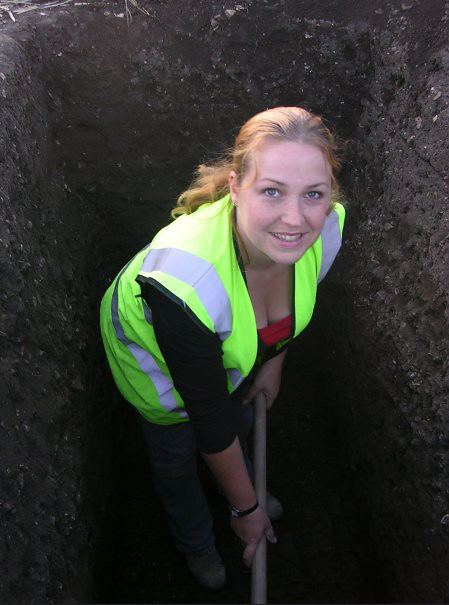
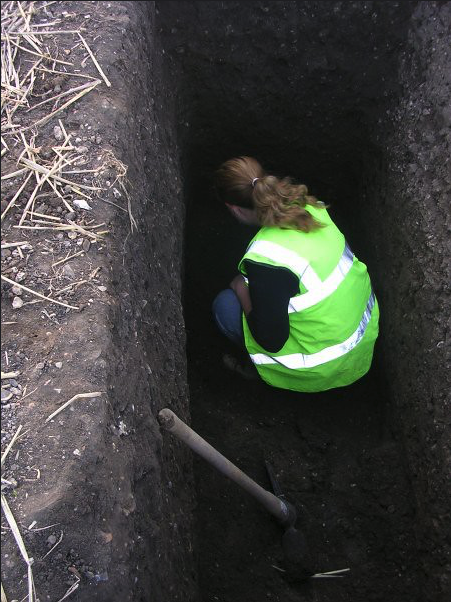
Michelle Bullivant excavating a large ditch in Hill Close Milton, 2008.
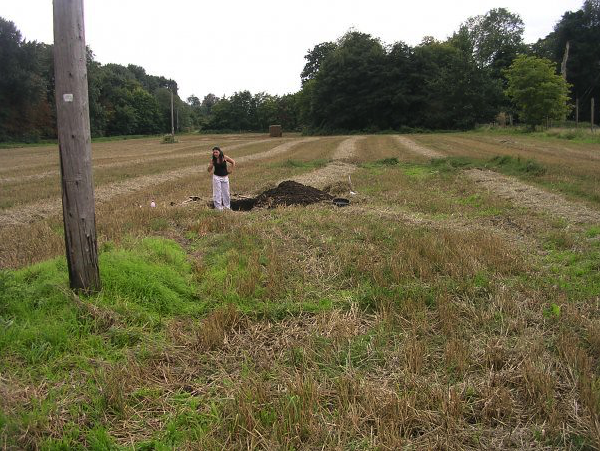
In September 2008, Active8 Archaeology carried out a programme of archaeological test pit excavation at Long Meadow and Hill Close, Fen Road, Milton, following earlier fieldwalking, geophysical survey and aerial photographic work.
Six test pits were excavated across areas where previous surveys had identified possible archaeological features. The aim was to determine whether the cropmarks and geophysical anomalies represented genuine archaeological remains and to gain a better understanding of the history of the site.
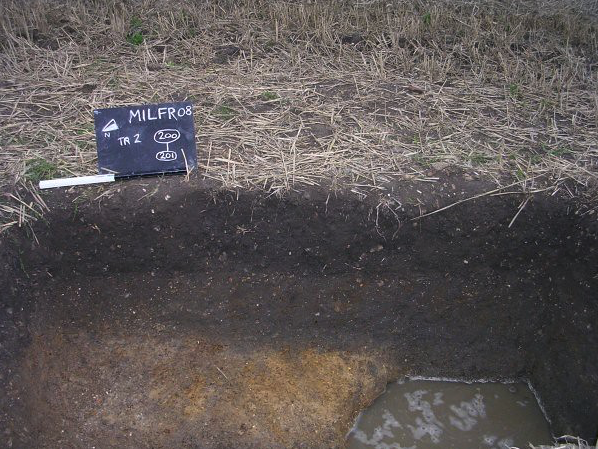
The results were particularly significant in Long Meadow, where several of the test pits revealed substantial boundary ditches containing Roman pottery dating from the 1st to 4th centuries AD. These finds confirmed the presence of an extensive Roman landscape and supported earlier interpretations that the site may contain the remains of a native Romano-British farmstead or settlement.
One test pit uncovered a sequence of intersecting Roman boundary ditches, demonstrating that the landscape had been reorganised over time. Another revealed a Roman-period pit containing pottery, animal bone, charcoal and fragments of worked deer antler, together with evidence that may indicate small-scale industrial activity.
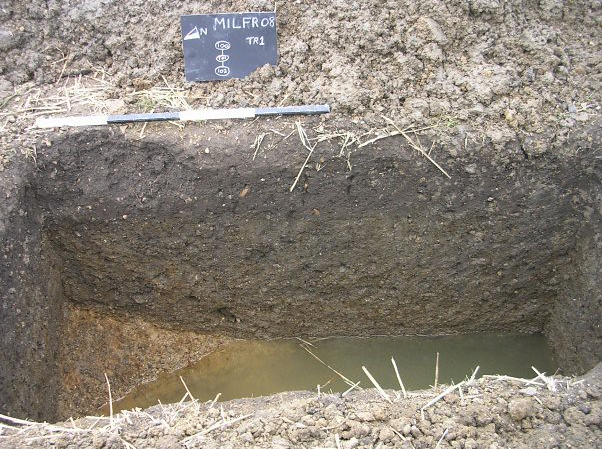
At Hill Close, investigations focused on an area thought to contain the remains of a medieval manor and moat. Excavation revealed a substantial ditch, over 1.7 metres deep, containing medieval pottery, animal bone and oyster shell. The ditch appeared to cut an even earlier feature, suggesting a long and complex history of occupation at the site. Finds from the vicinity included a possible bone gaming piece and an early medieval horseshoe.
The excavation demonstrated that the archaeological features identified through earlier survey work were genuine and well-preserved beneath the ploughsoil. The evidence points to a landscape occupied and managed from the Roman period onwards, with later medieval activity centred on the manorial site at Hill Close.
The project helped to confirm the archaeological importance of this part of Milton and contributed to a growing understanding of the Roman and medieval development of the parish.
This excavation was carried out by Active8 Archaeology in partnership with Milton Parish Archaeological Warden Dr Derek Booth. Looking back through the photographs and report more than fifteen years later, it remains one of those projects that demonstrated just how much archaeology survives beneath seemingly ordinary agricultural fields, and how aerial photography, geophysics and excavation can be combined to reveal the story of a landscape through time. You can download the full report by clicking the blue button below:
Active8 Archaeology, is an independent archaeological consultancy founded and directed by Michelle Bullivant, which carried out a number of archaeological investigations and community heritage projects in Cambridgeshire particularly during the 2000s.
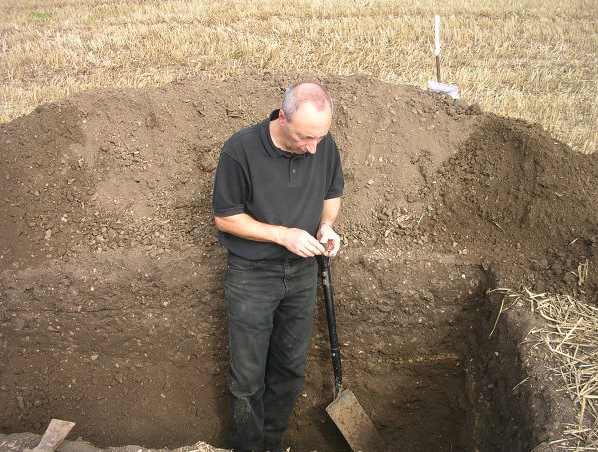
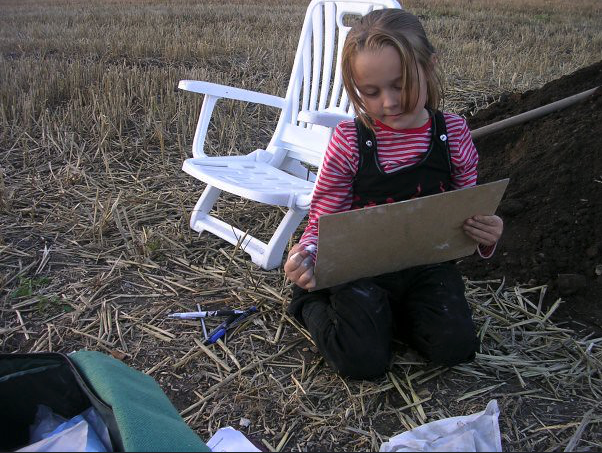
Below are a few photographs from the dig - if I find any more as I go through things I will add them here.