

Fulbourn Asylum - How it was built and what it has cost - special report 1908
Fulbourn Asylum - How it was built and what it has cost - special report 1908
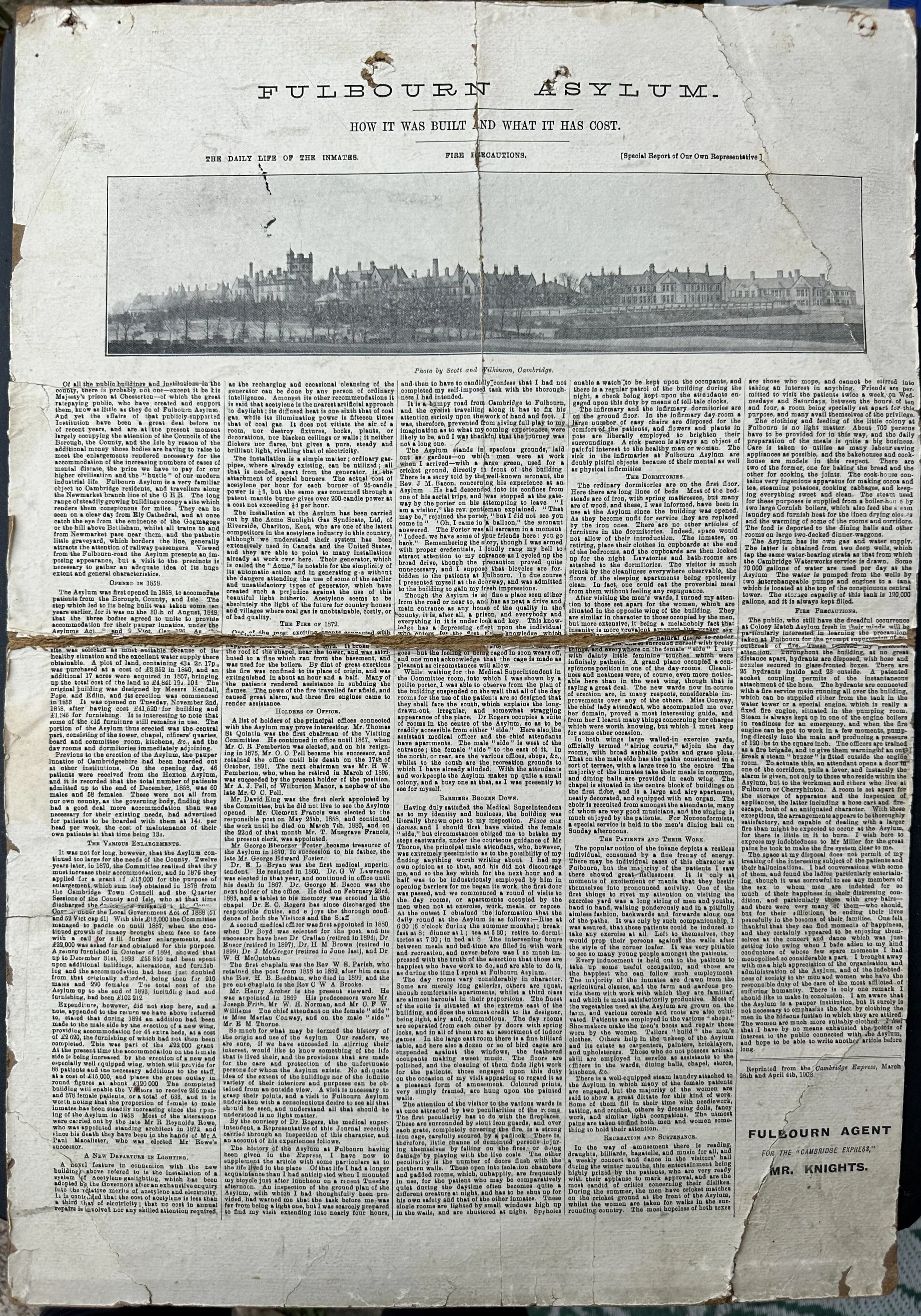
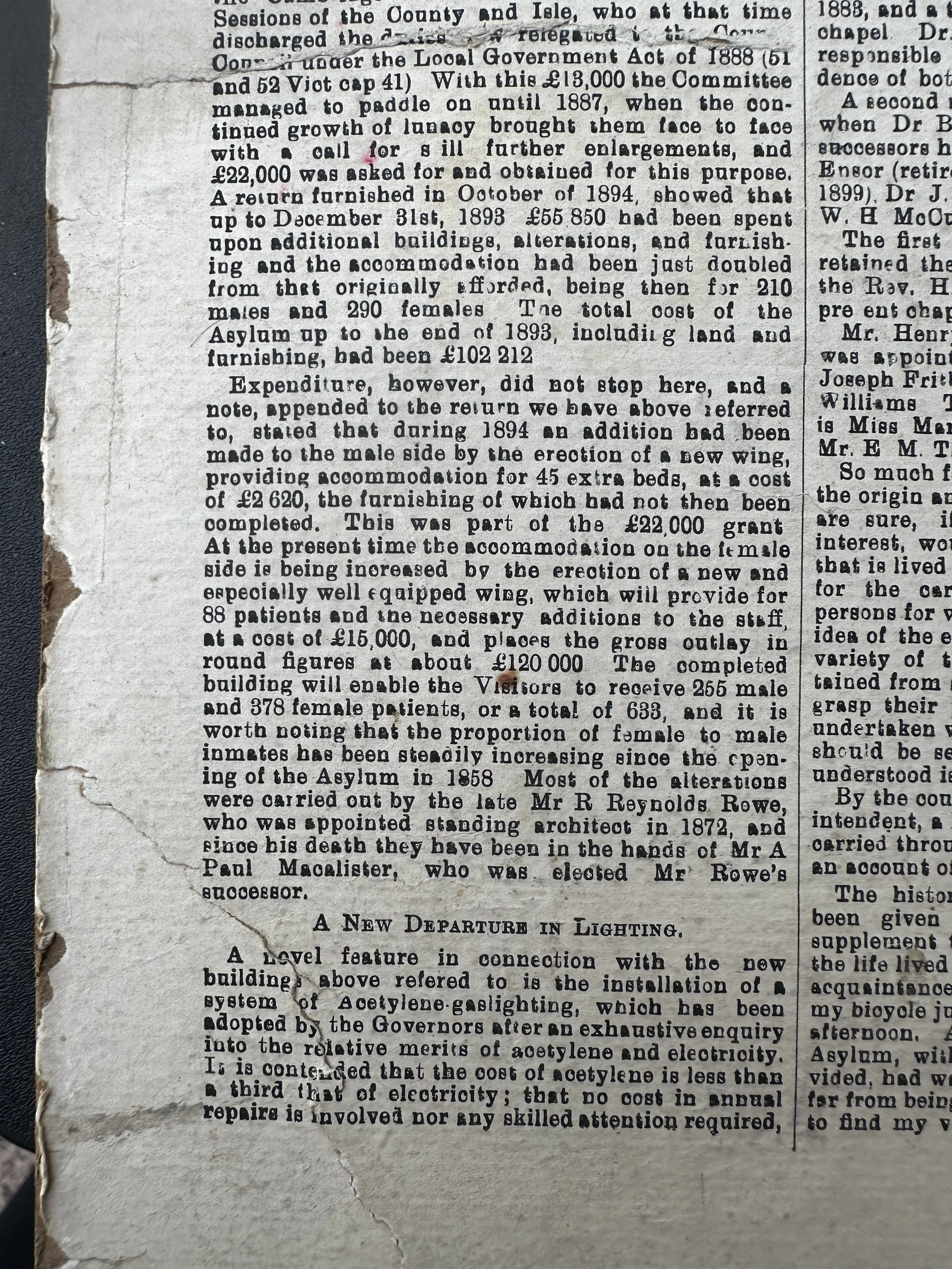
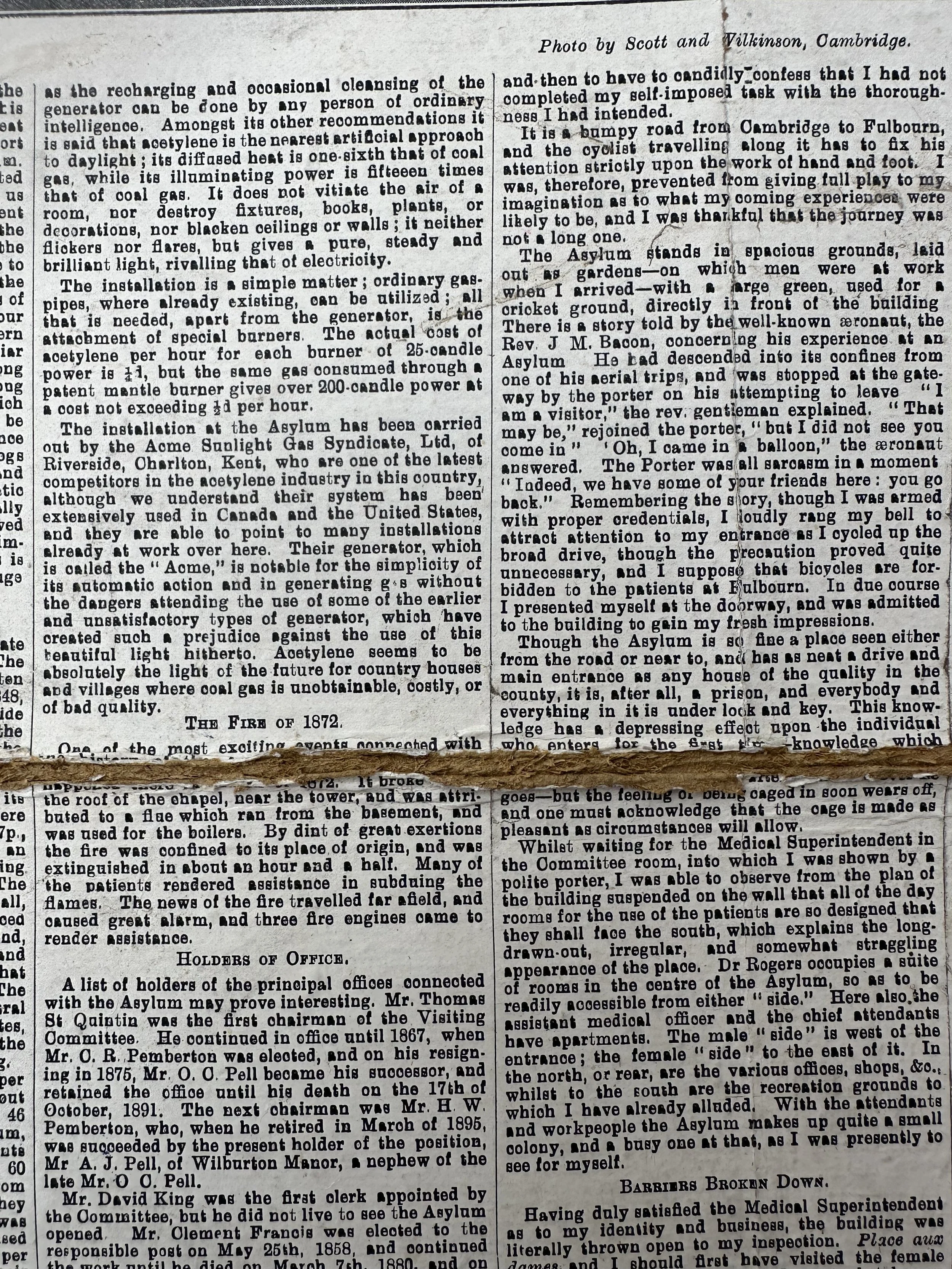
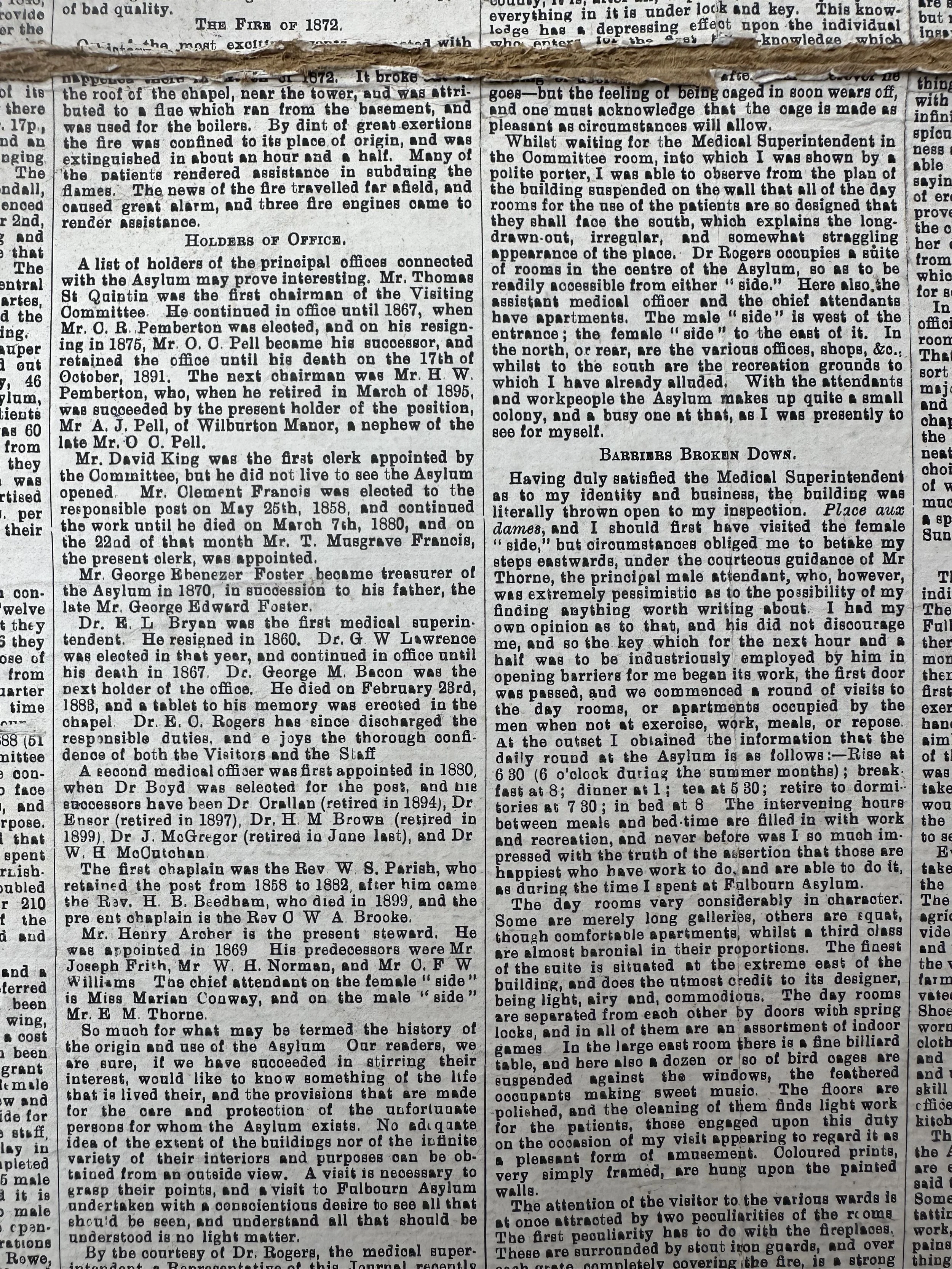
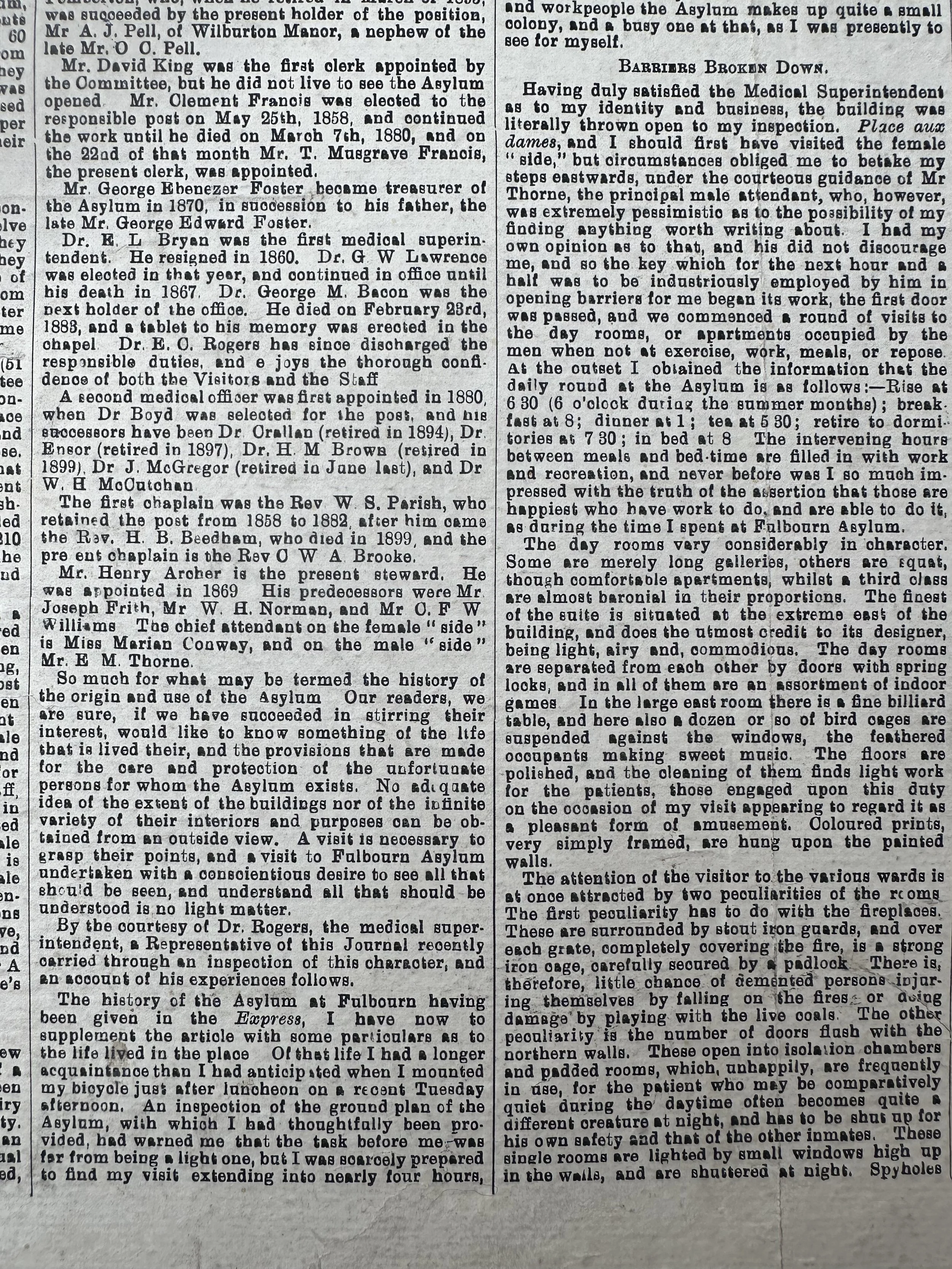
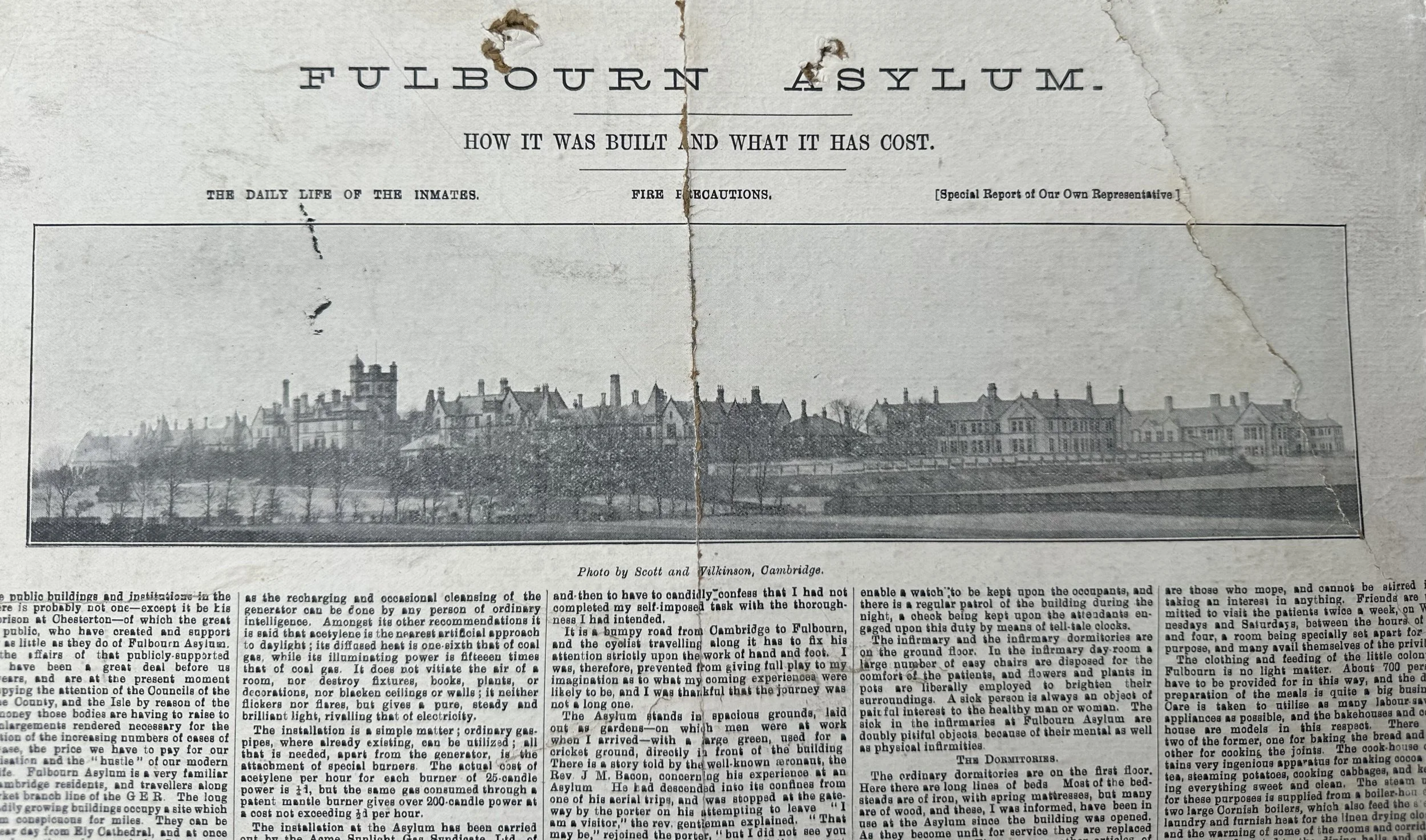
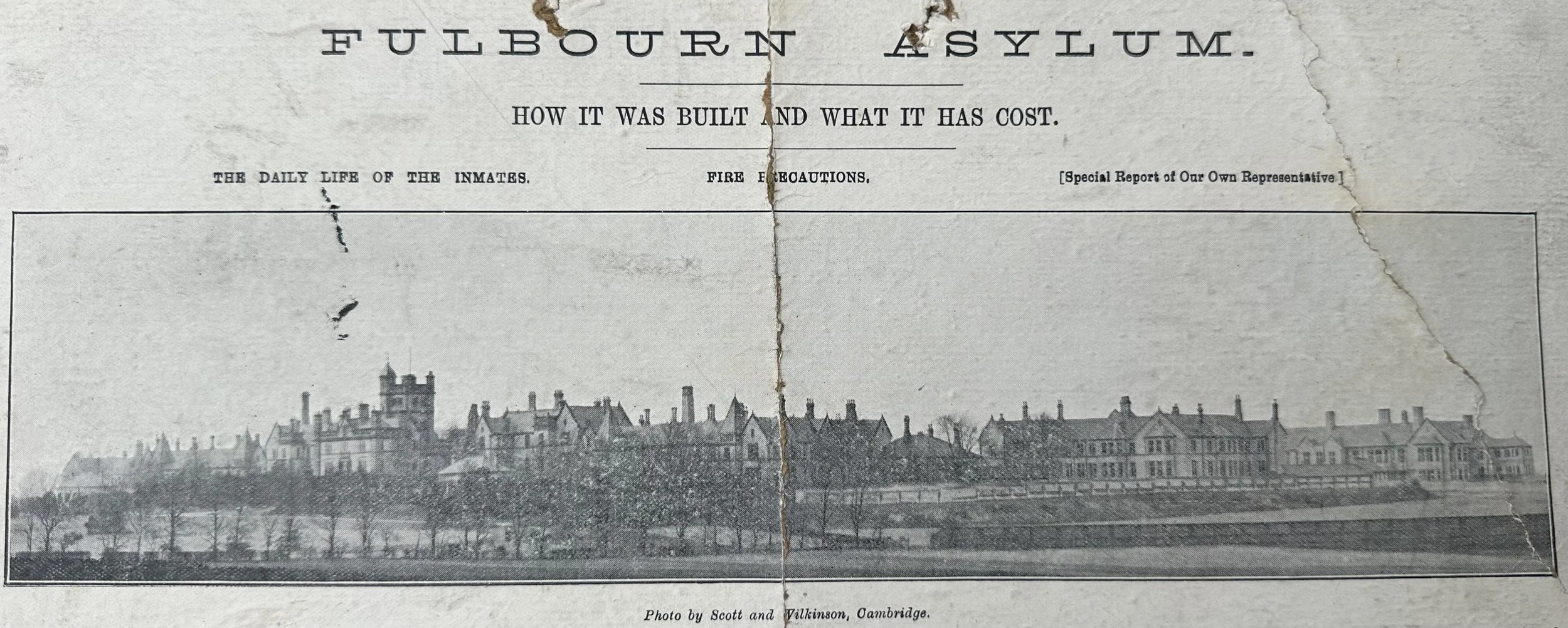
Fulbourn Asylum - How it was built and what it has cost - special report 1908. This large poster sized print on board was donated by David who passed this interesting article (and picture of the nurses and staff c.1910, shown below) to my pal Jonathan Phillips, who in turn made sure that it made its way in to the care of my archives, and is now shared here.
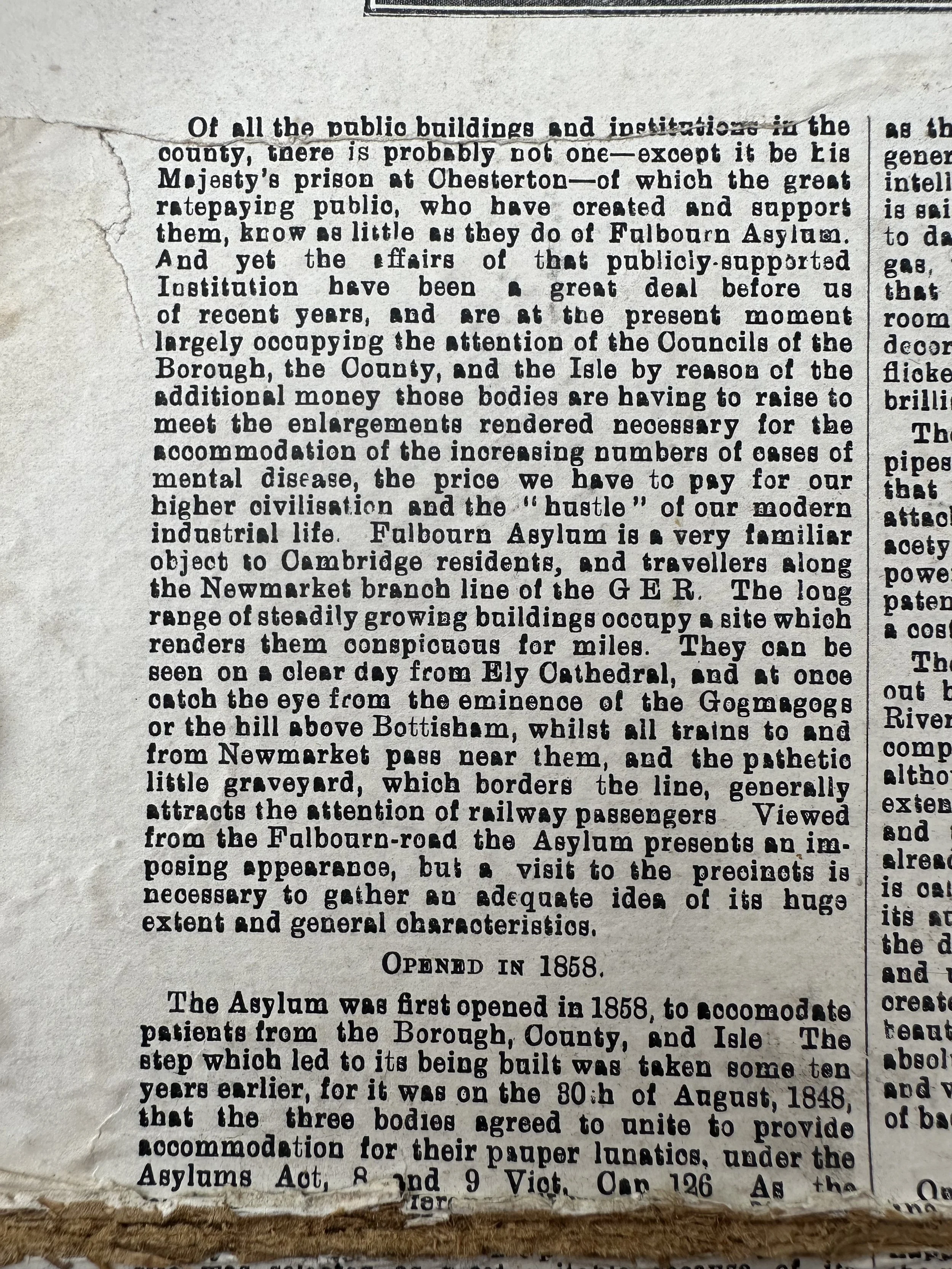
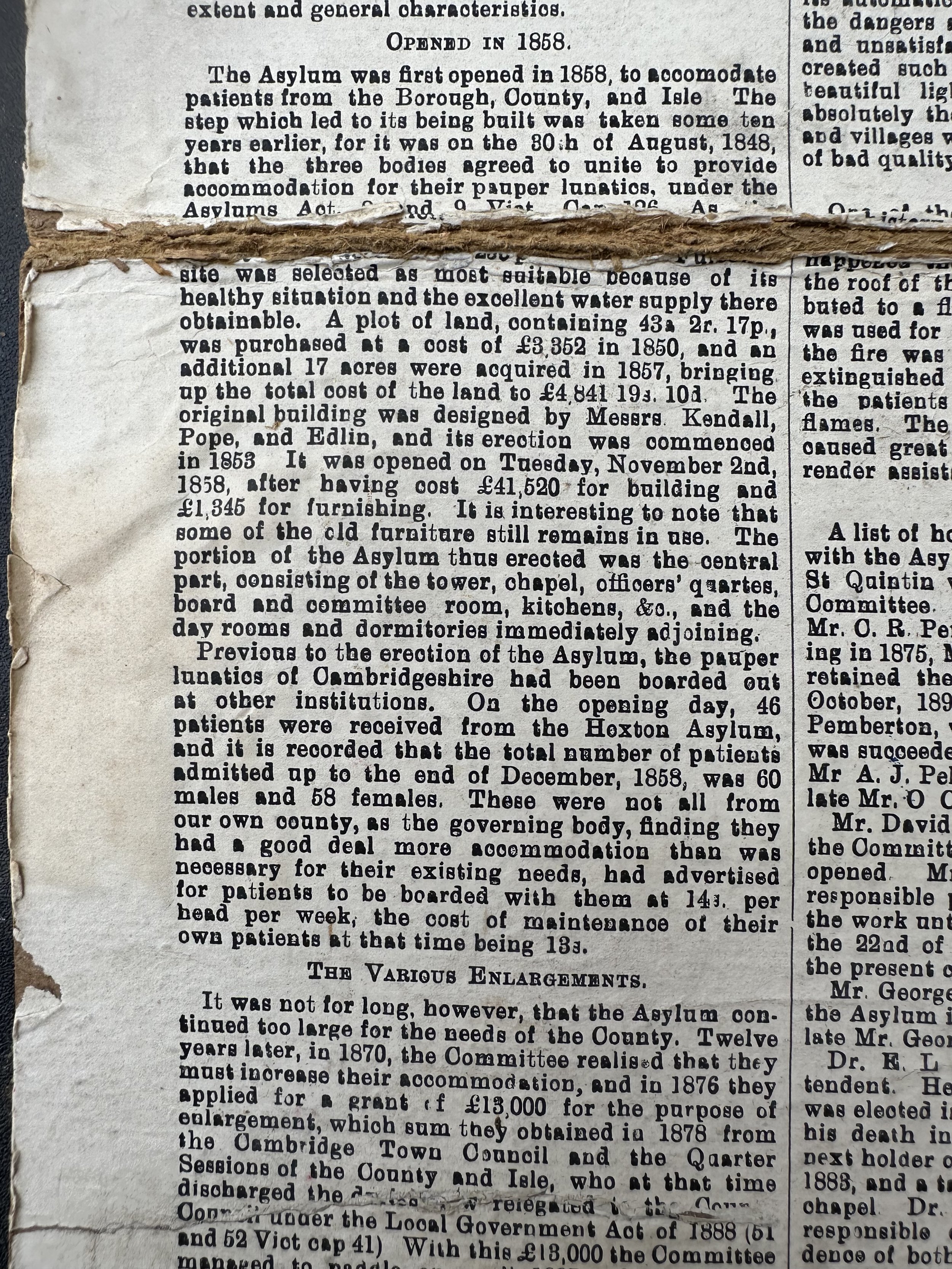
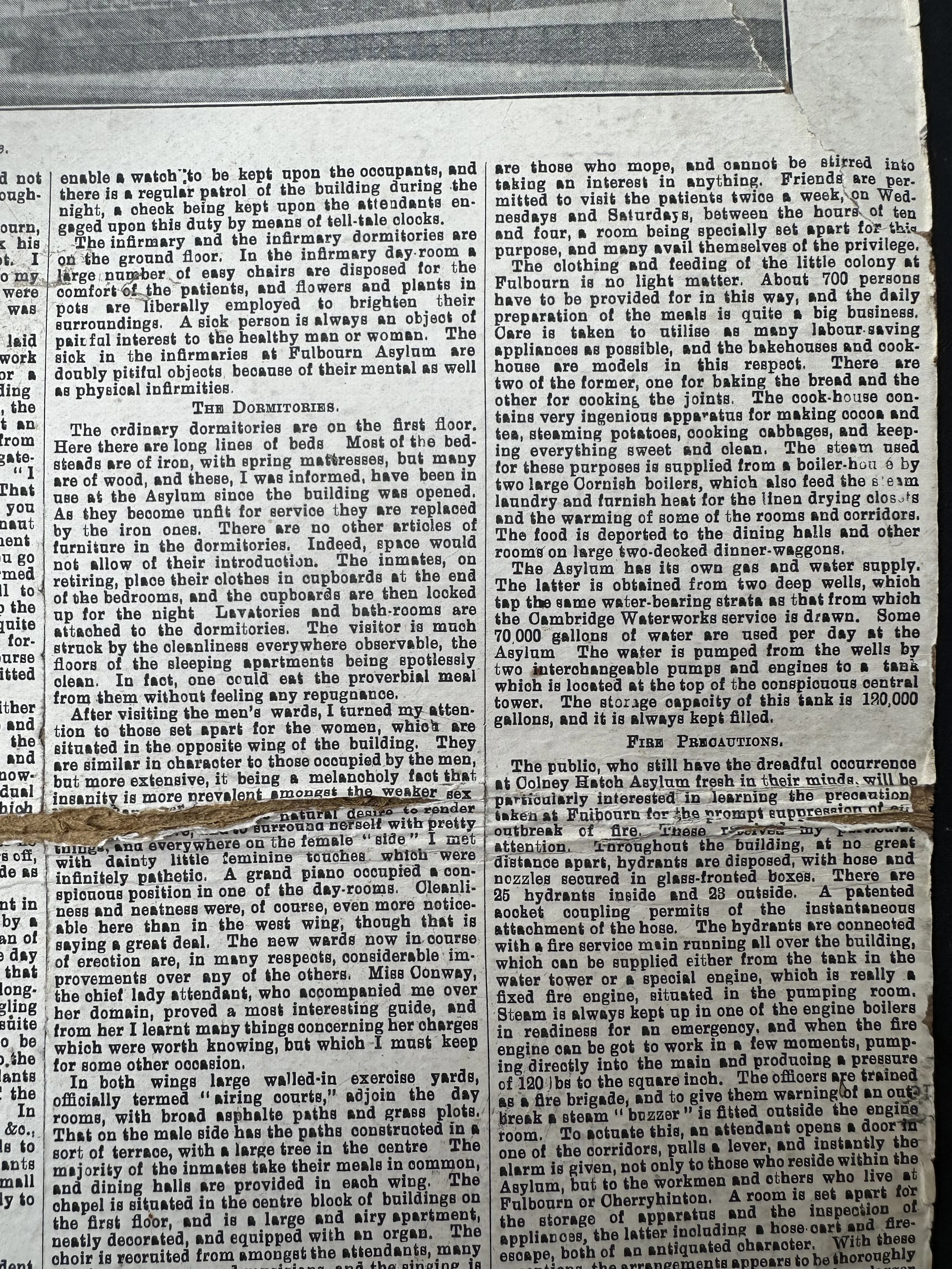
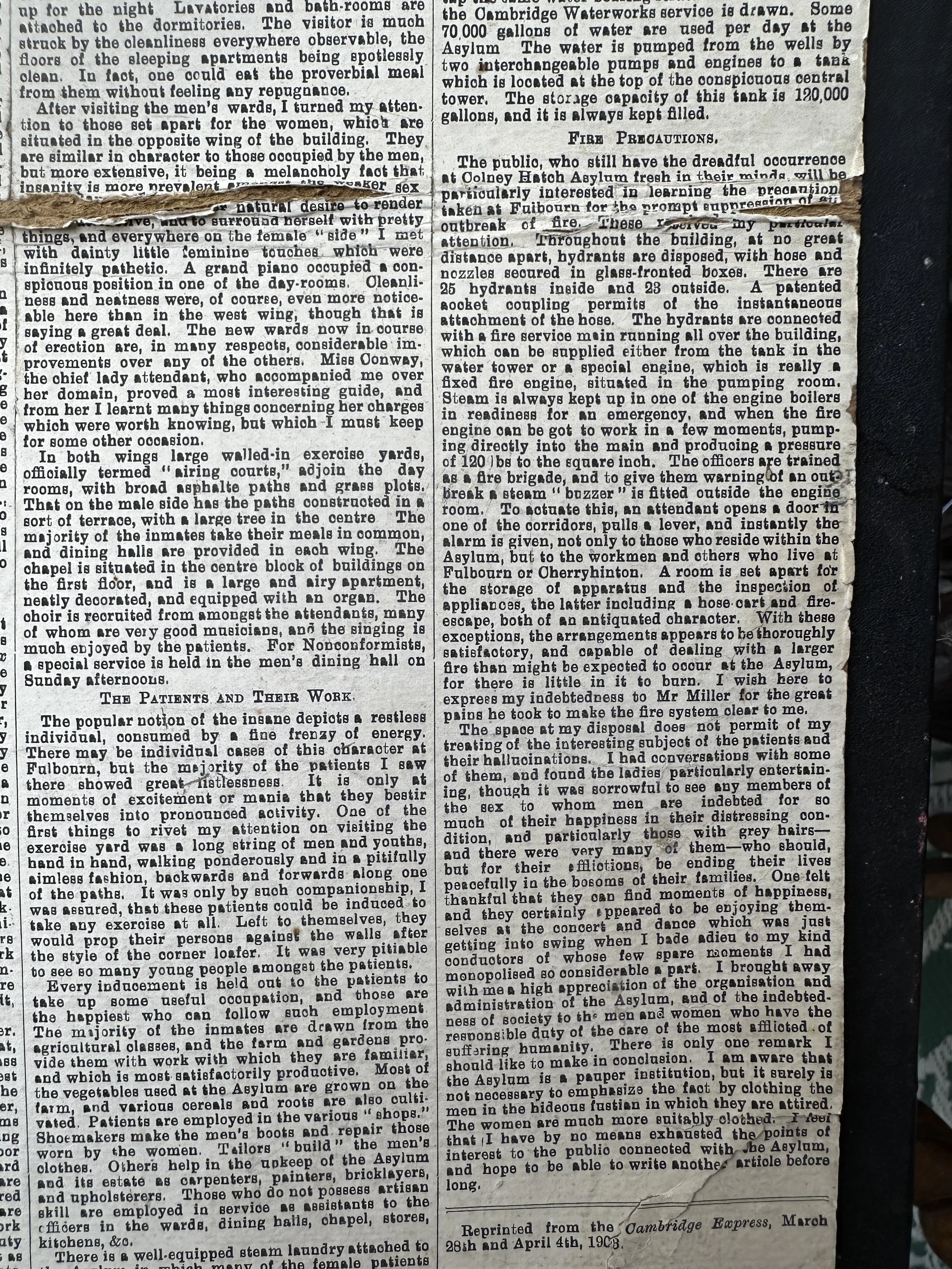
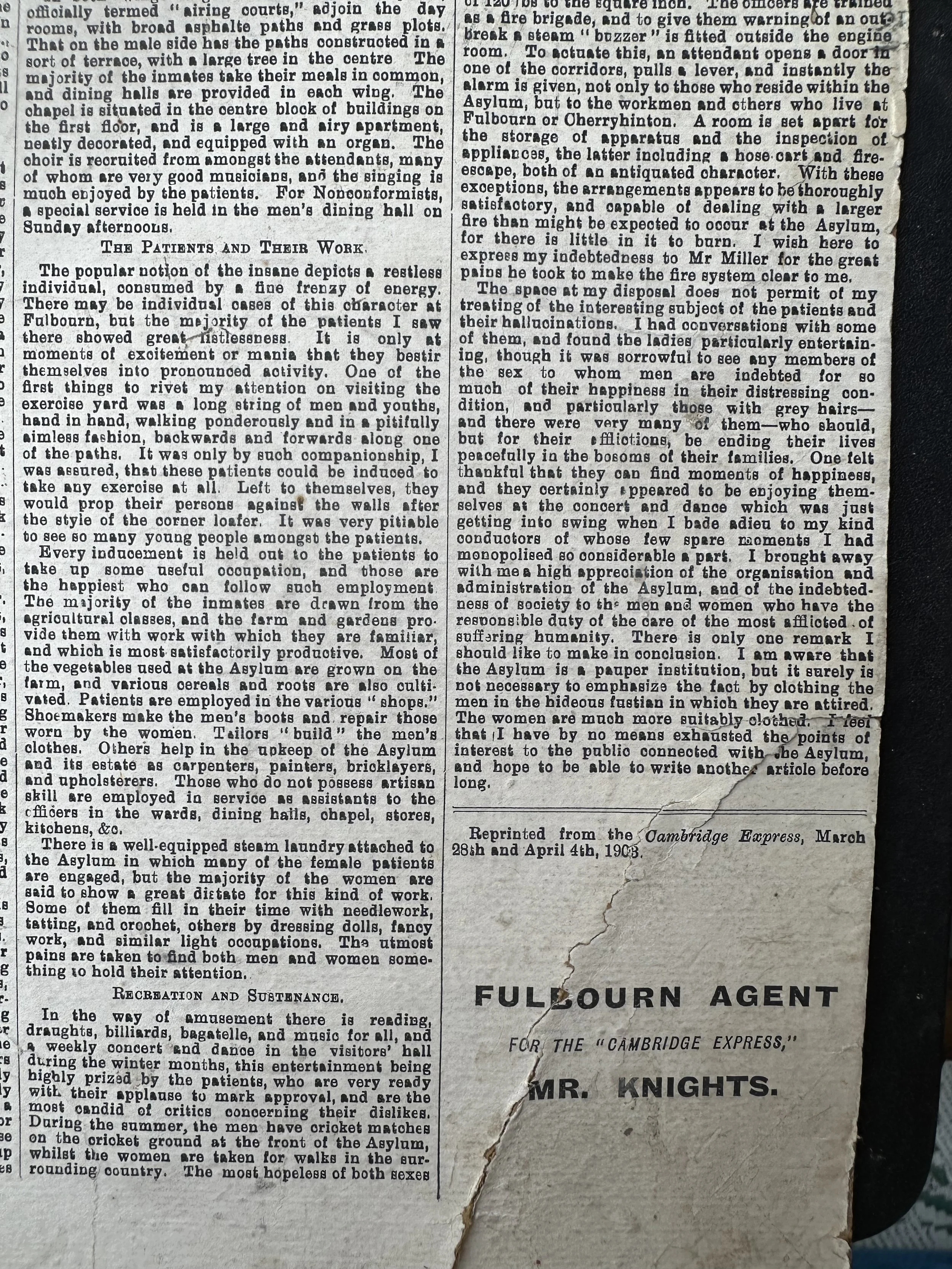
This fascinating article, reprinted from the Cambridge Express in March and April 1903, provides a rare contemporary glimpse into Fulbourn Asylum at the beginning of the twentieth century. Entitled "Fulbourn Asylum: How It Was Built and What It Has Cost", it combines the institution's history, finances, daily routines, staffing, accommodation and fire precautions in a remarkably detailed account.
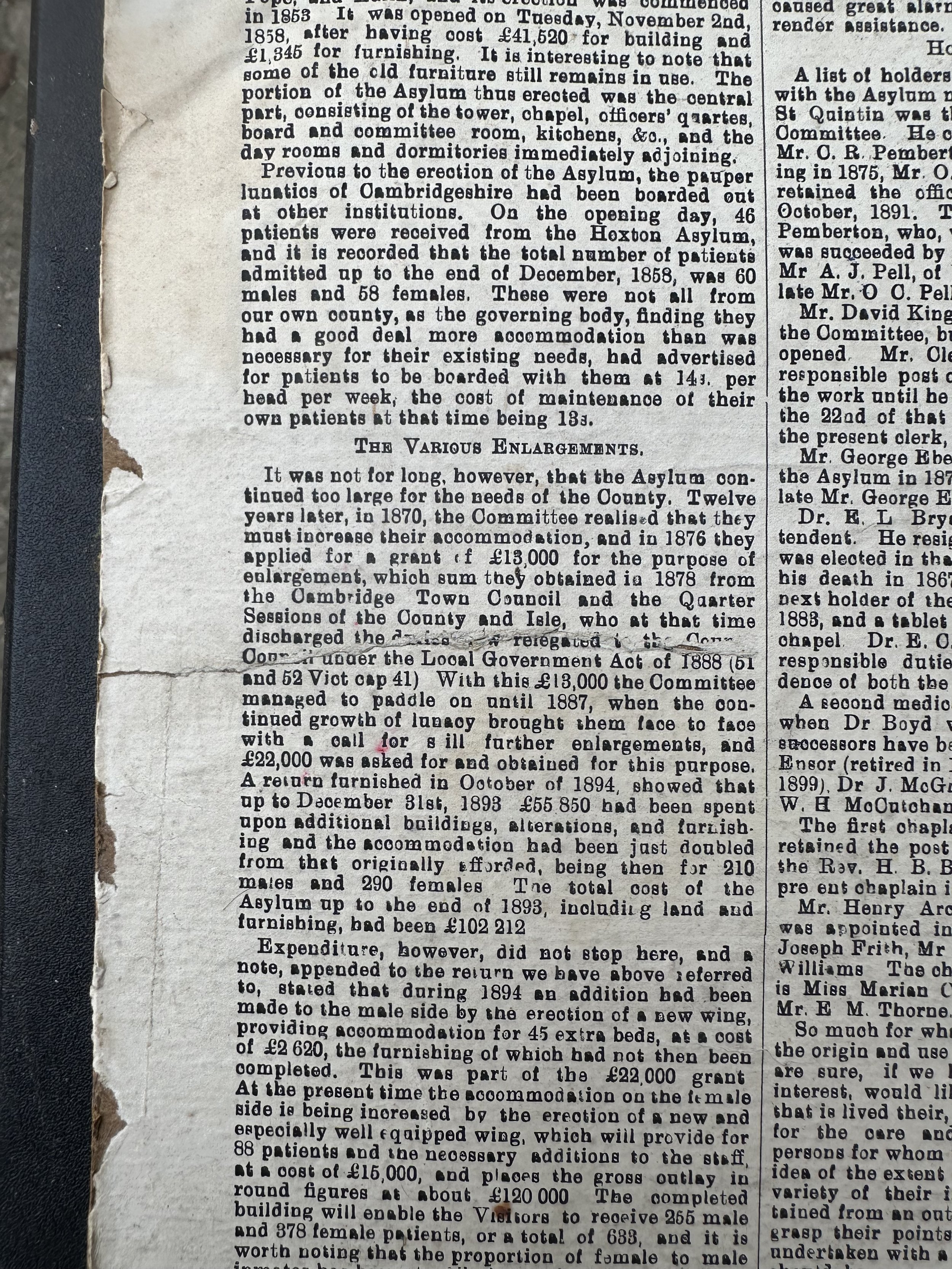
The article explains that the asylum was established through a partnership between Cambridge Borough, Cambridgeshire County and the Isle of Ely, opening on 2 November 1858. The original site comprised more than 43 acres, selected for its healthy situation and reliable water supply. Construction cost over £41,000, with further additions and alterations bringing expenditure to almost £120,000 by 1903.
Particularly valuable are the descriptions of life within the asylum. Patients were encouraged to work on the farm, in the gardens and workshops, or in the laundry and sewing rooms. Recreational activities included reading, music, concerts, dances, cricket and organised walks. The institution operated almost as a self-contained community, complete with its own bakery, cookhouse, wells, water tower and extensive fire-fighting equipment.
The article also preserves the names of many of the asylum's officers and medical staff and records the successive enlargements required as patient numbers increased. By 1903 accommodation was being expanded yet again, reflecting changing attitudes towards mental health care and the growing demands placed upon public institutions.
Although written from the perspective of its time, the report offers a valuable insight into both the practical operation of Fulbourn Asylum and Edwardian attitudes towards mental illness. As a contemporary source, it provides an important snapshot of one of Cambridgeshire's most significant public buildings and the hundreds of patients and staff who lived and worked there.
If you have family connections to Fulbourn Asylum (Fulbourn Hospital) , memories, photographs or documents relating to the institution, I would be very pleased to hear from you. Please use the Comments Box below to get in touch.
I will do a follow up post about this article in more detail soon, and will give the full transcription as it will be very useful as a historical source.
Michelle Bullivant Archives
Nurses and staff at Fulbourn Asylum c.1910
Letter from David received with the photograph and newspaper poster.